PaceA long day from Addis Ababa, better as a night away. Start early, walk down slowly at this height and leave time for the climb back out. Other plates in this section.
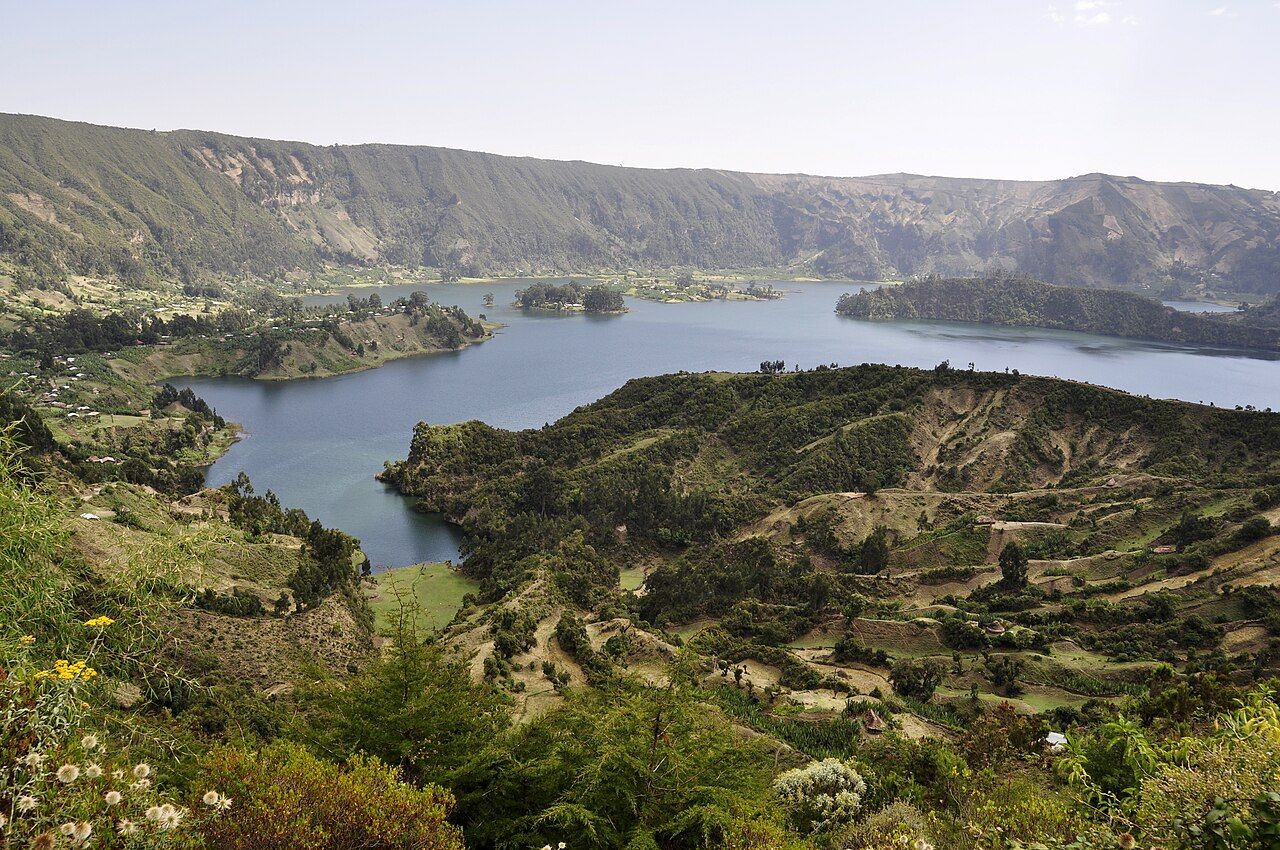
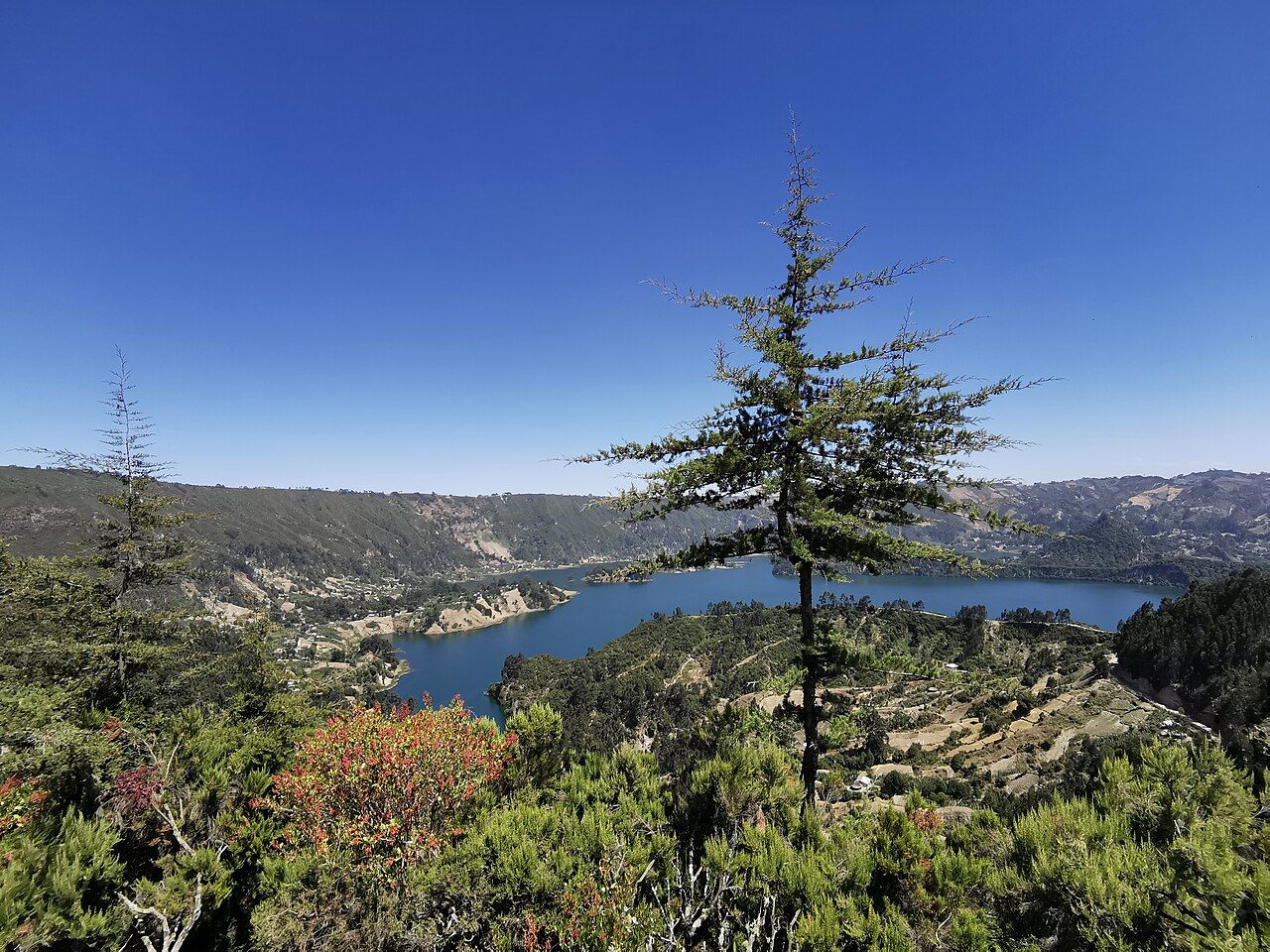
Wenchi is an extinct volcano a few hours' drive west of Addis Ababa, and its crater holds a deep lake with a small wooded island and a monastery on it. The rim sits above 3,000 metres; the water lies a few hundred metres below, ringed by terraced fields, patches of native forest and pasture where cattle and horses graze. It is one of the easiest highland landscapes to reach from the capital, and it fills a full day or an unhurried weekend.
A lived-in crater
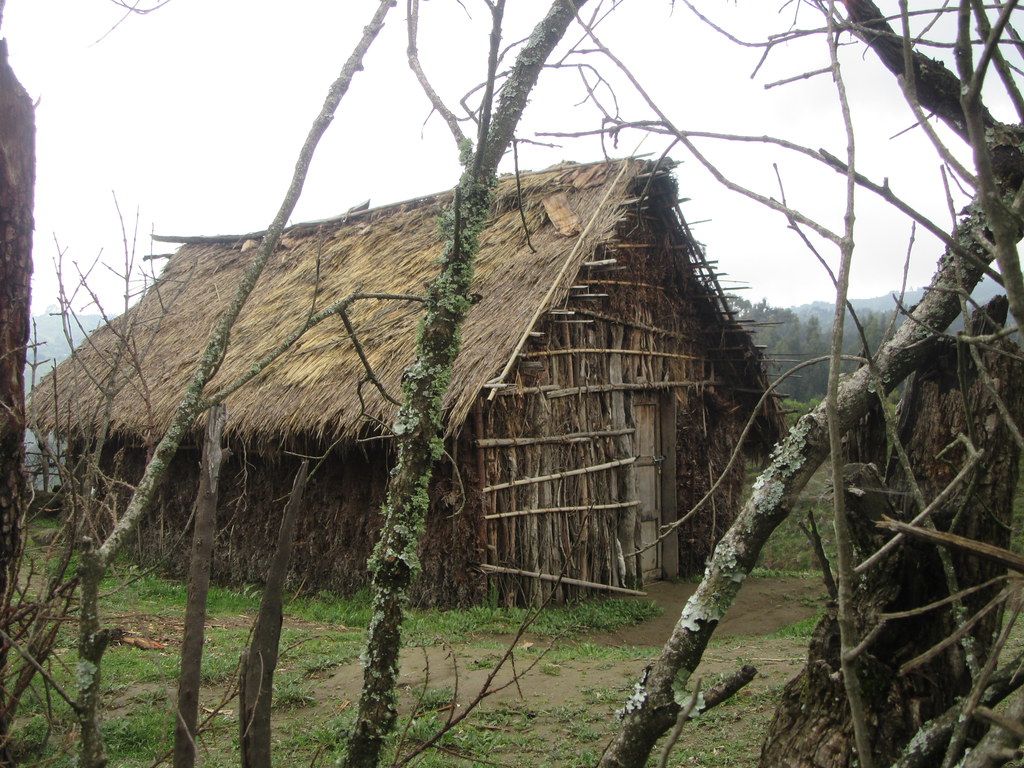
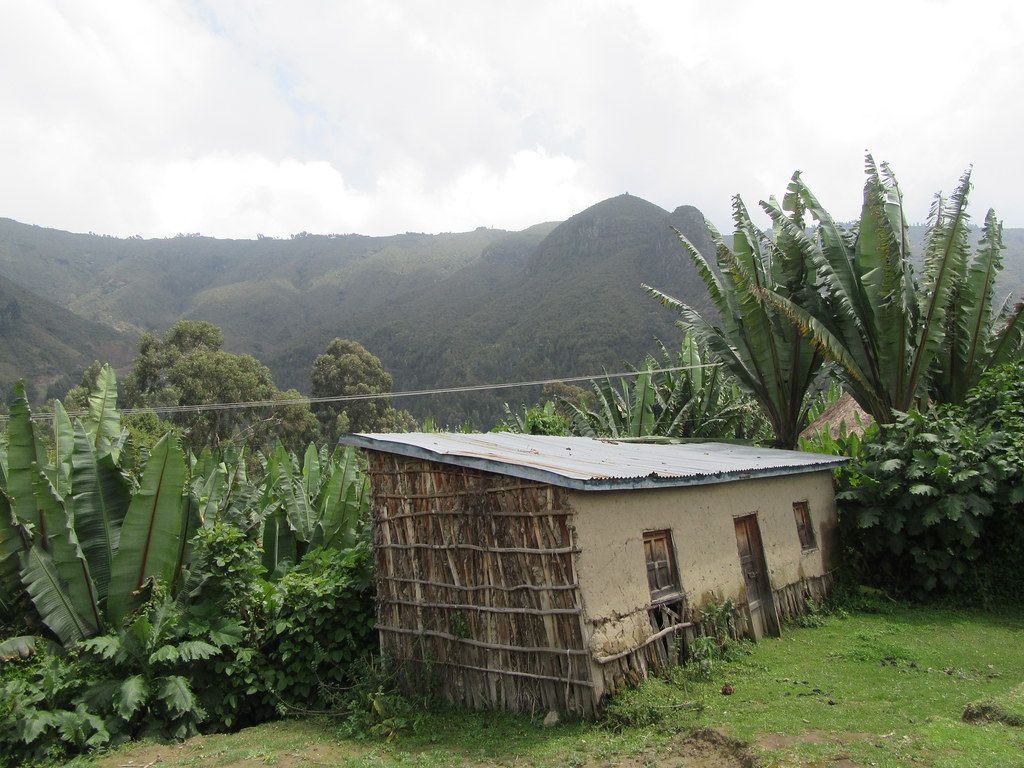
The crater is several kilometres across, and the lake fills much of its floor in a long, irregular shape. Its slopes are farmed by Oromo villages, so the way down passes fields of barley and potatoes and stands of enset, the false banana that feeds much of southern and western Ethiopia, with taller trees and heather on the steeper ground. Because people live and work inside the crater, the paths are working paths, used every day by farmers, children walking to school and horses carrying grain. Keep to the track, close any gate you open and ask before you photograph anyone.
The weather changes fast at this height. Mornings can be clear and cold, and cloud often spills over the rim by early afternoon, especially in the long rains from about June to September. The dry months from October to February usually bring the clearest views, and October, just after the rains, is when the crater is at its greenest.
The road west via Ambo
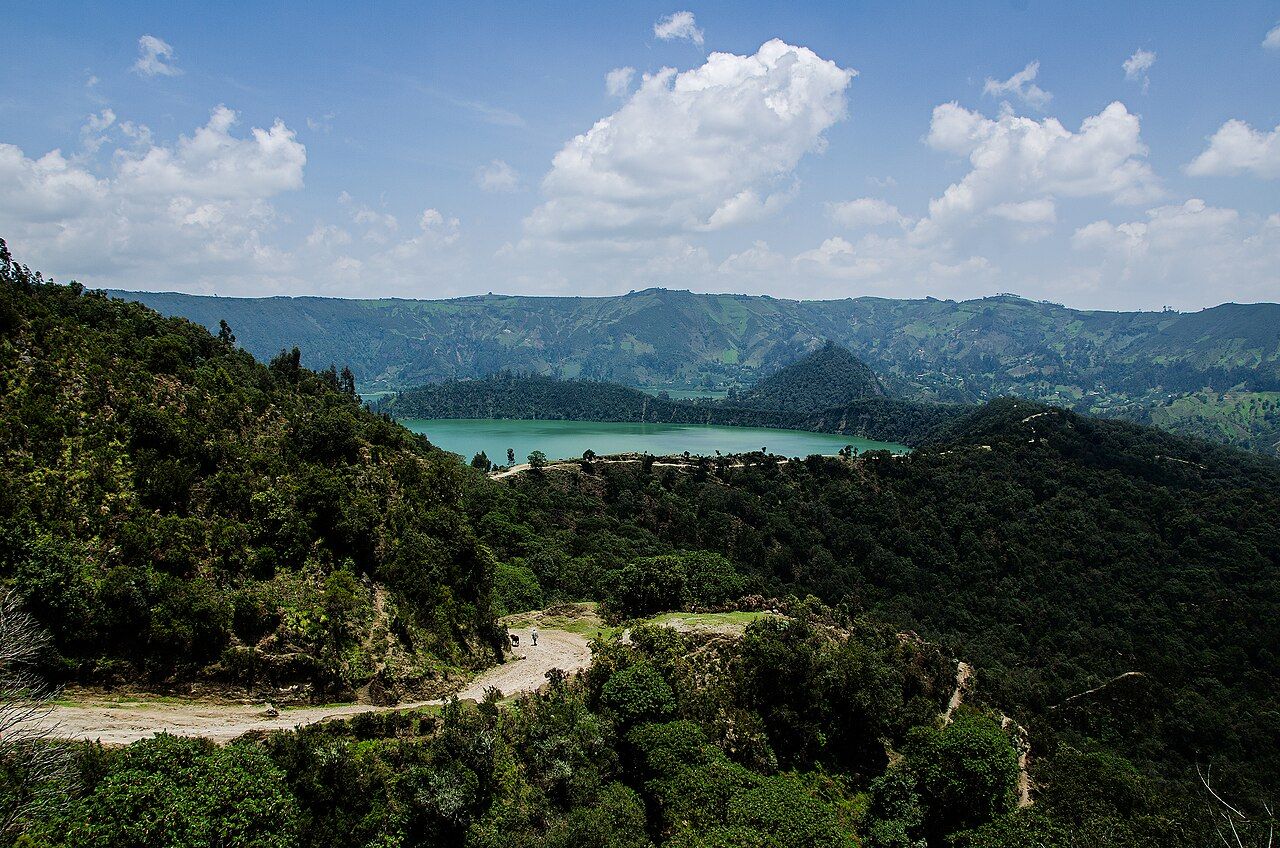
The classic route leaves Addis Ababa on the road west to Ambo, a market town known for its mineral springs and the sparkling water bottled there. From Ambo a road heads south through high farmland to the crater rim, and the last stretch is slow. Another approach climbs from Woliso on the Jimma road to the south, which lets you turn the trip into a loop and return a different way. Either way, allow most of a morning for the drive from the capital and set off early, so that you reach the rim before the cloud builds.
A community-run visitor scheme at the rim handles entry, local guides, horses and boats. Carry small notes in birr. A local guide is worth having even on an obvious path: the money stays in the villages, and the guide can tell you who farms which slope and what the island church means to the people who row out to it.
Down to the water on foot or on horseback
From the rim there are two ways down. Walking takes roughly an hour on a steady descent, longer if you stop for the views, and the climb back up takes more. At this altitude your breath runs short sooner than you expect, so the return is the part to plan for. Horses, led by their owners, carry visitors down and, more usefully, back up again. Agree the price and the route before you start, and say clearly whether you want the horse one way or both.
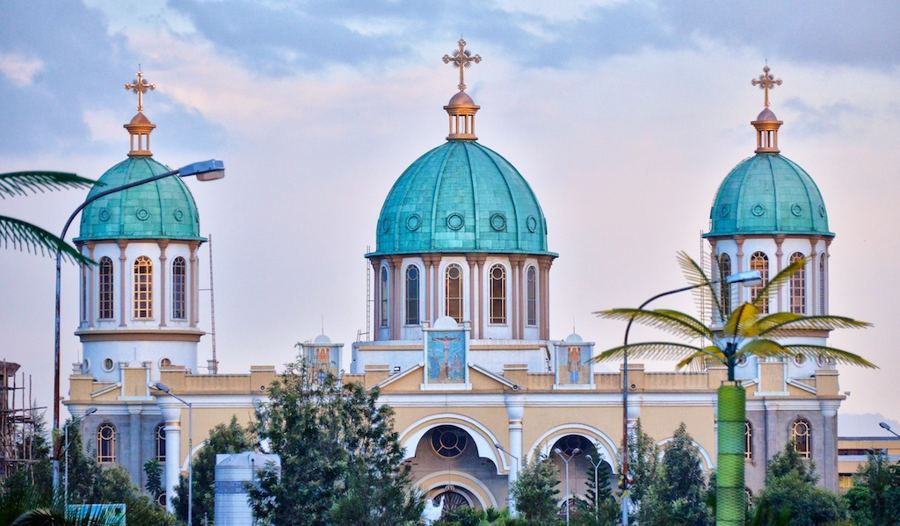 Plate 18 · Addis AbabaAddis Ababa, the high capital between circuits
The track is steep and turns slippery after rain. Wear shoes with grip, carry water and a warm layer, and let the handler lead on the loose sections rather than steering the horse yourself. If you have flown in from sea level only a day or two earlier, take the first part slowly and see how you feel; the notes on altitude in the guide to planning an Ethiopian circuit apply here as much as in the north.
The island monastery
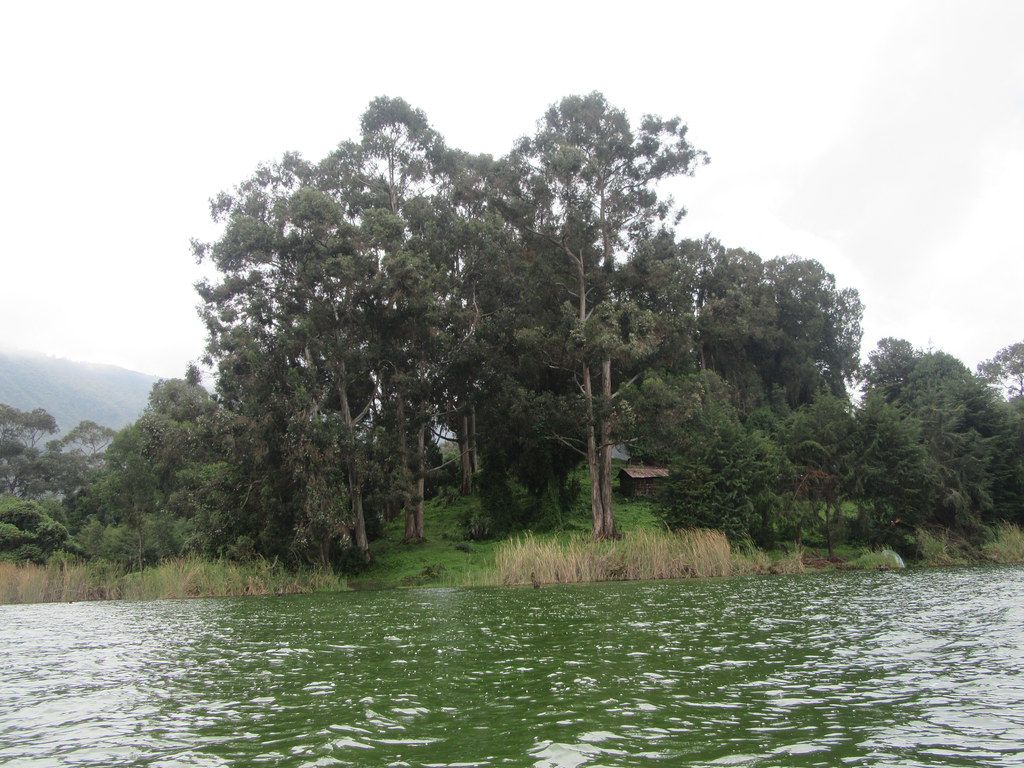
At the shore, small boats carry visitors across to the island, where the monastery known as Wenchi Cherkos stands among old trees. It is an active place of prayer first and a sight second. Dress modestly, with shoulders and knees covered, take your shoes off if you are invited into the church, and follow whatever the priest or caretaker indicates. Some parts may be closed to visitors, and some Ethiopian monasteries limit where women may go; if you are unsure, ask your guide before you land rather than once you are there.
The crossing is short and calm on a still day. From the water you get the best sense of the crater as a single bowl, with farmed slopes rising on every side and the rim cutting a sharp line against the sky. Life jackets are not always offered, so ask, and decide for yourself whether to go if you are a weak swimmer.
Hot springs and the far side
Beyond the lake, paths continue across the crater floor to hot springs, where local people bathe and collect water they value for its healing properties. Reaching them adds time and a longer climb out, so plan the whole route with your guide at the start rather than deciding halfway. Treat the springs as you would a church: they are used for prayer and healing as much as for washing, and bathers expect privacy.
Walkers with more time can follow tracks around part of the rim for wide views over the lake and, on clear days, across the surrounding highlands. These are farm and village paths rather than marked trails, which is another reason to walk with someone local.
Pacing a weekend
A day trip from Addis Ababa is possible but long: two drives of several hours each wrapped around a few hours in the crater. A night nearby, in Ambo, Woliso or one of the places to stay near the rim, gives you an early start, quieter paths and time for the springs. Wenchi also makes a gentle warm-up before higher ground. If you are heading north to trek the Simien Mountains, a day of walking at over 3,000 metres close to the capital is a useful test of how your body copes.
It combines well with other short trips from the capital. Debre Libanos and the Jemma gorge lie to the north on a different road, and the two make a pair of contrasting days: a crater lake and farmland in the west, a monastery and a deep gorge in the north.
- Set off from Addis Ababa early and aim to be on the rim by mid-morning.
- Agree horse and boat arrangements at the start, including the return.
- Carry a warm layer and rain cover even in the dry season.
- Keep small notes for fees, horses, boats and the guide.
- Ask before photographing people, homes or the monastery.
Images on this page: DeDuijn (CC BY-SA 4.0); amanderson2 (CC BY 2.0); Wenjvn (CC BY-SA 4.0); amanderson2 (CC BY 2.0); amanderson2 (CC BY 2.0); Tricholome (CC BY-SA 4.0); Rod Waddington (CC BY-SA 2.0).


