PaceA long day trip from Addis Ababa works well; leave early, spend the morning at the monastery and bridge, and keep the afternoon for the gorge edge and the gelada. Other plates in this section.
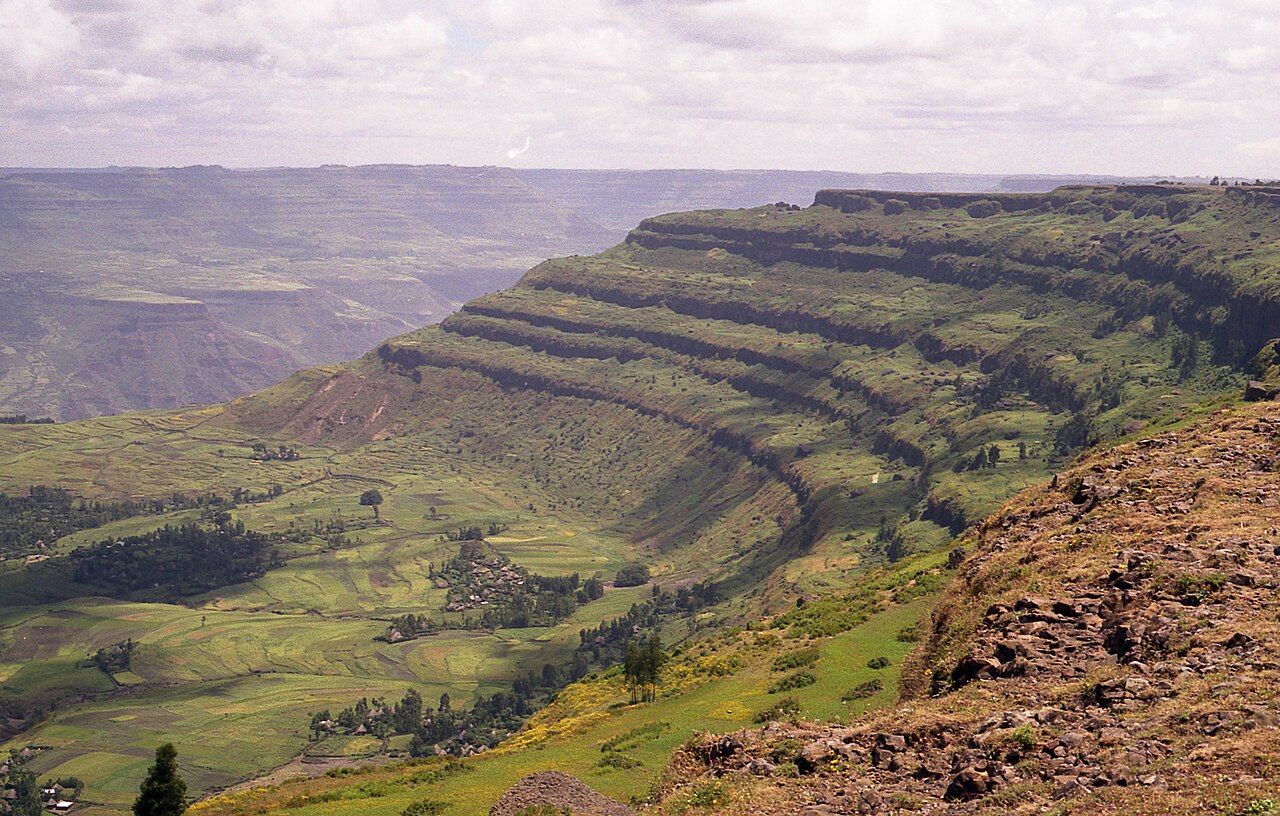
North of Addis Ababa the road crosses a high, open plateau of barley fields and grazing land, then reaches a point where the ground simply ends. Below lies the gorge of a tributary of the Jemma river, which in turn runs down to the Blue Nile, with cliffs, waterfalls and terraced slopes dropping hundreds of metres. On a ledge partway down sits Debre Libanos, one of the most important monasteries in Ethiopia. With the gorge, an old stone bridge and the gelada that live along the cliffs, it makes one of the best day trips from the capital.
The monastery and its saint
Debre Libanos was founded in the thirteenth century by Saint Tekle Haymanot, one of the most revered figures in the Ethiopian Orthodox Church, who is said to have prayed for years in a cave in the cliffs above. Tradition tells that he stood on one leg in prayer for so long that the other withered, and icons often show him with wings and a single leg. The monastery became the head of a great monastic order, and its abbot long held one of the highest positions in the Church.
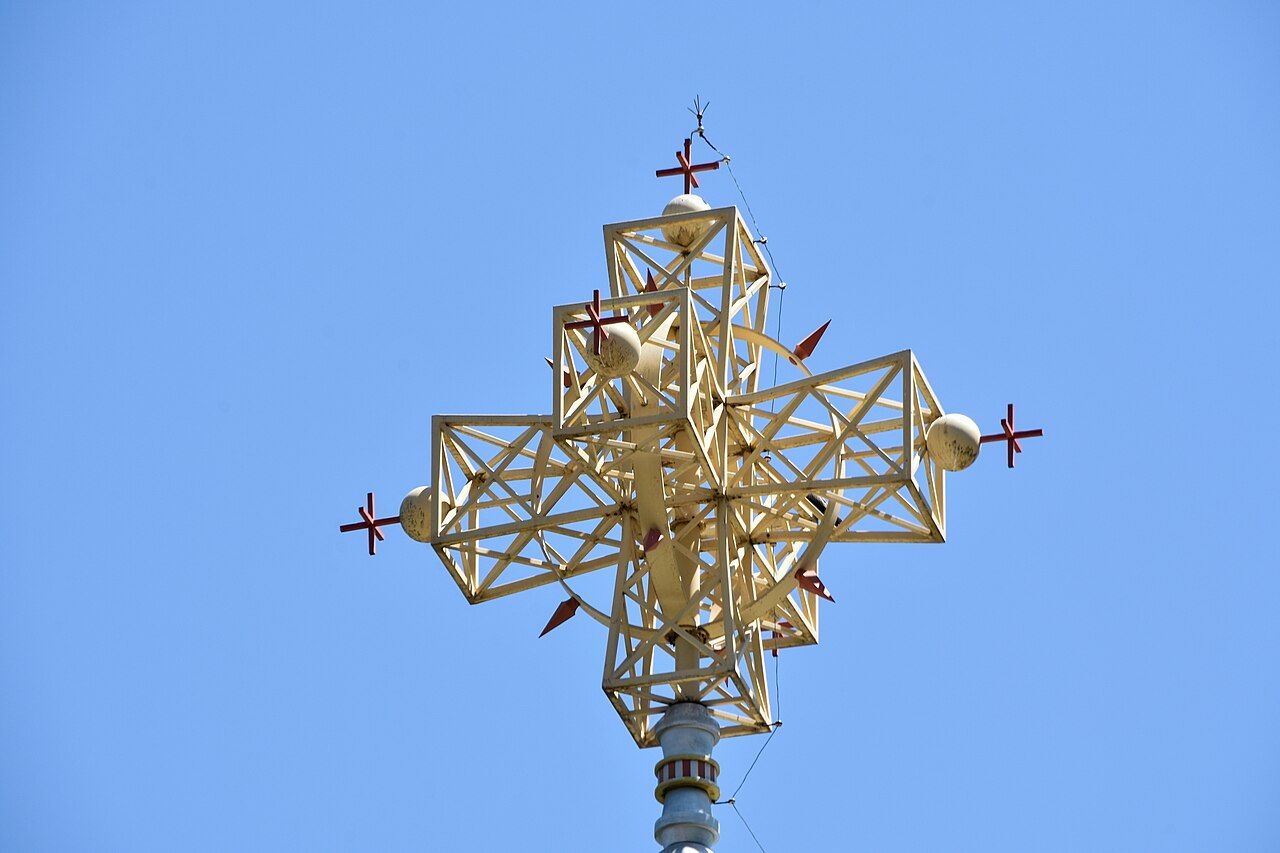
The buildings have been destroyed and rebuilt several times over the centuries. The present church was built in the early 1960s under Emperor Haile Selassie, a large stone building with a dome and towers, and stained glass and painted decoration inside. It is less old than many churches you may see further north, but the sense of continuity here is strong: pilgrims come in numbers, especially on the saint's feast days, and many come for holy water from the spring near the saint's cave, reached by a path up the slope behind the church.
Dress modestly, take off your shoes at the church door, and ask before you photograph worshippers or priests. A small fee is usually charged to visitors.
The massacre of 1937
Debre Libanos is also the site of one of the worst atrocities of the Italian occupation of Ethiopia. In February 1937, after an attempt on the life of the Italian viceroy, Rodolfo Graziani, in Addis Ababa, the occupying forces carried out mass killings in the capital. Graziani then accused the monks of Debre Libanos of involvement, without evidence, and in May 1937 he ordered their execution.
Italian troops and colonial soldiers under Italian command killed monks, deacons, students and pilgrims at the monastery and at nearby sites over several days. The figures announced at the time were in the hundreds; later research puts the dead far higher, possibly around two thousand. The killings were largely ignored outside Ethiopia for decades. Memorials at the monastery recall the dead. Take time with them, and remember that for many visitors this is a place of mourning as well as prayer.
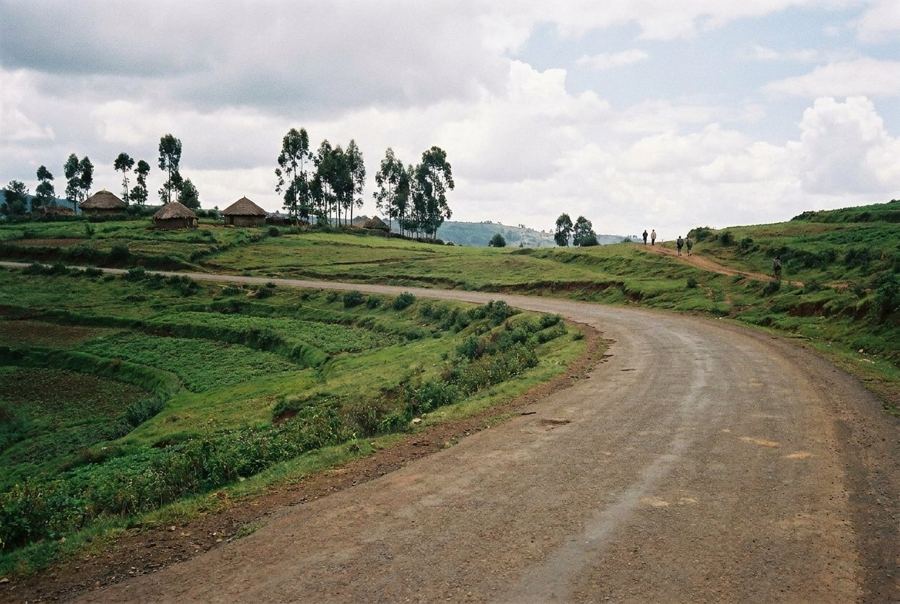 Plate 20 · EthiopiaPlanning an Ethiopian circuit
The old bridge
A short distance from the monastery, near the road, an old stone bridge crosses a stream just above where it drops into the gorge. It is widely called the Portuguese bridge, after the Portuguese soldiers who came to Ethiopia in the sixteenth century, but it is usually dated to the late nineteenth century, when it was built for a local ruler. Either way, it is a fine piece of masonry, with arches on a rough stone base, and it gives one of the best viewpoints along the gorge. The path down to it can be slippery and there is no railing at the edge; children and touts may offer to guide you.
Gelada on the gorge edge
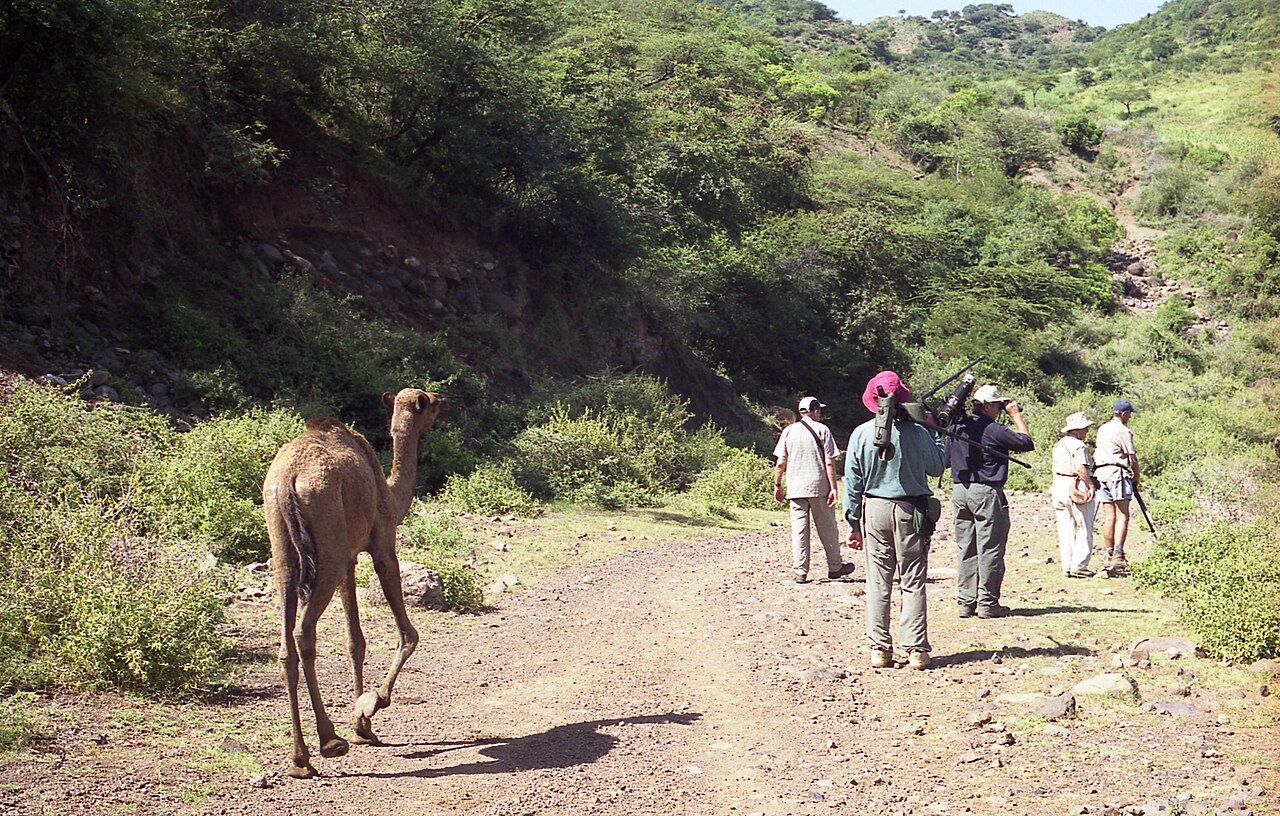
The cliffs and meadows along the rim are home to gelada, the grass-eating primates found only in the Ethiopian highlands. Males have long capes of hair, and both sexes have a bare patch of red skin on the chest. They spend the day grazing on the grassy edge and sleep on ledges on the cliff face at night, so early morning and late afternoon are the best times to find them near the top.
Keep a respectful distance, do not feed them, and let them move past you rather than walking into the middle of a group. Gelada are also the stars of the Simien Mountains, where the troops are larger, but the Jemma gorge gives you a good first look much closer to Addis. Lammergeiers and other raptors ride the air currents along the cliffs, so binoculars earn their place.
Walking the rim and going further
The plateau edge is good walking country, with paths along the rim and down into the gorge, and several viewpoints near the road. A longer trip continues along the main road north towards the Jemma valley and the Blue Nile gorge, where the road winds down a dramatic set of bends to a bridge over the river; this is a full day in itself and often part of a longer road journey north towards Lalibela or Bahir Dar.
The rim can be cold and windy, even when Addis Ababa is mild, and the rainy season from June to September brings mist and mud along with green slopes and full waterfalls.
A hundred kilometres north of Addis
Debre Libanos is roughly a hundred kilometres north of Addis Ababa, two to three hours' drive depending on traffic leaving the city. Most visitors go with a hired car and driver for the day. Public minibuses run along the main road, but they make a day trip slow.
Images on this page: Ron Knight from Seaford, East Sussex, United Kingdom (CC BY 2.0); Timothy A. Gonsalves (CC BY-SA 4.0); Ron Knight from Seaford, East Sussex, United Kingdom (CC BY 2.0).


