PaceA day and a half is comfortable: the stelae park and church on the first morning, the outlying tombs, reservoir and Ezana stone in the afternoons, when guides are free. Other plates in this section.
Axum is a small, dusty highland town that once sat at the heart of one of the great powers of the ancient world. The kingdom of Aksum traded ivory, gold and incense across the Red Sea and the Indian Ocean in the first centuries of the Christian era, minted its own coins and was among the first states to adopt Christianity. Very little of its city survives above ground. What does survive is extraordinary: a field of carved granite stelae, the tombs beneath them, and a church complex that the Ethiopian Orthodox Church holds to be the resting place of the Ark of the Covenant.
The kingdom behind the stones
Aksum grew from around the first century AD and was at its height from roughly the third to the sixth centuries, with influence reaching into southern Arabia. Its kings wrote in Ge'ez, the ancestor of the liturgical language still used in Ethiopian churches, and used Greek for foreign trade. In the fourth century King Ezana adopted Christianity, and the cross replaced the crescent and disc on his coins. The kingdom declined from the seventh century as trade routes shifted, and the centre of Ethiopian power moved south, towards places like Lalibela.
The town remained sacred long after its political power faded. Emperors came here to be crowned until the early modern period, and it is still one of the holiest places in Ethiopian Christianity. The archaeological sites were inscribed together on the UNESCO World Heritage List in 1980.
The northern stelae park
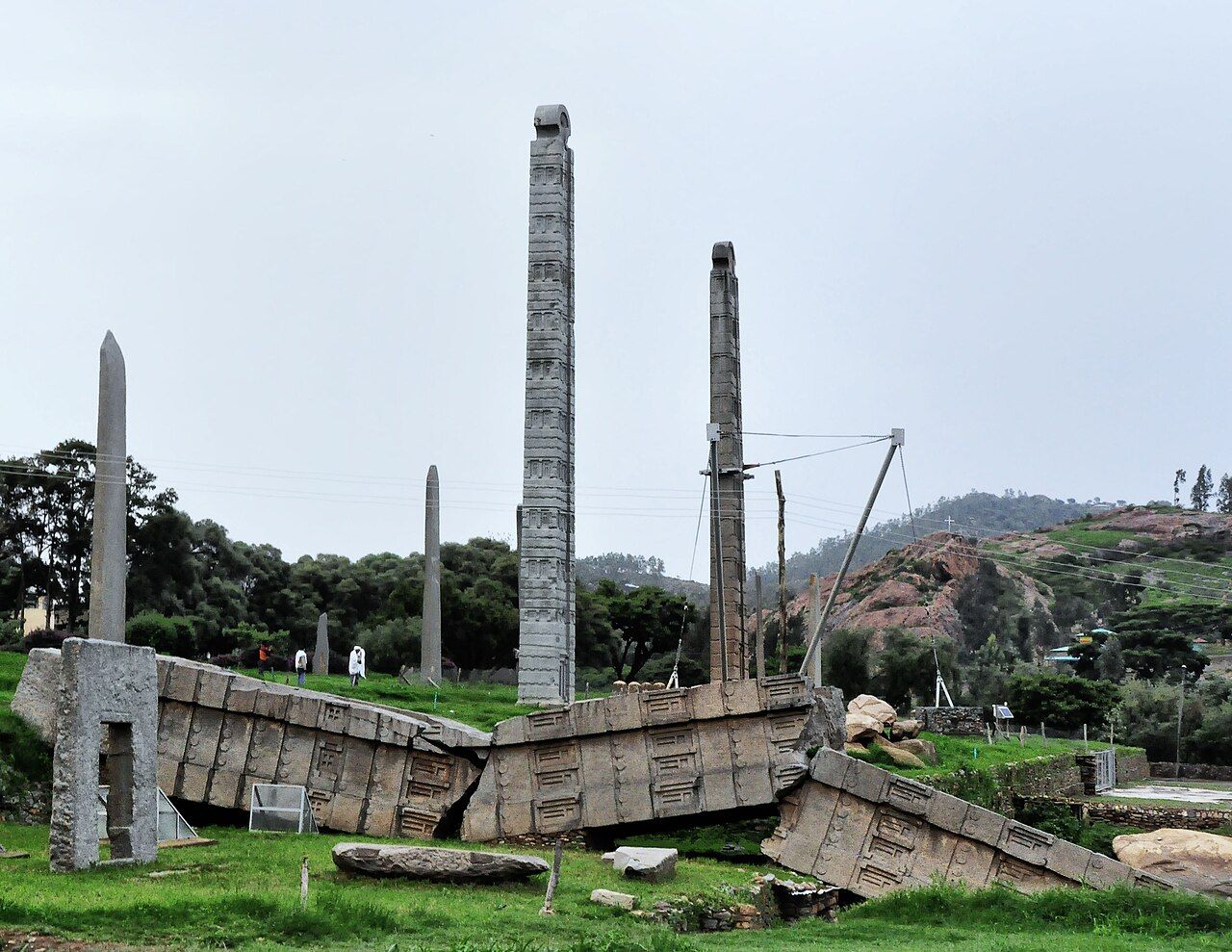
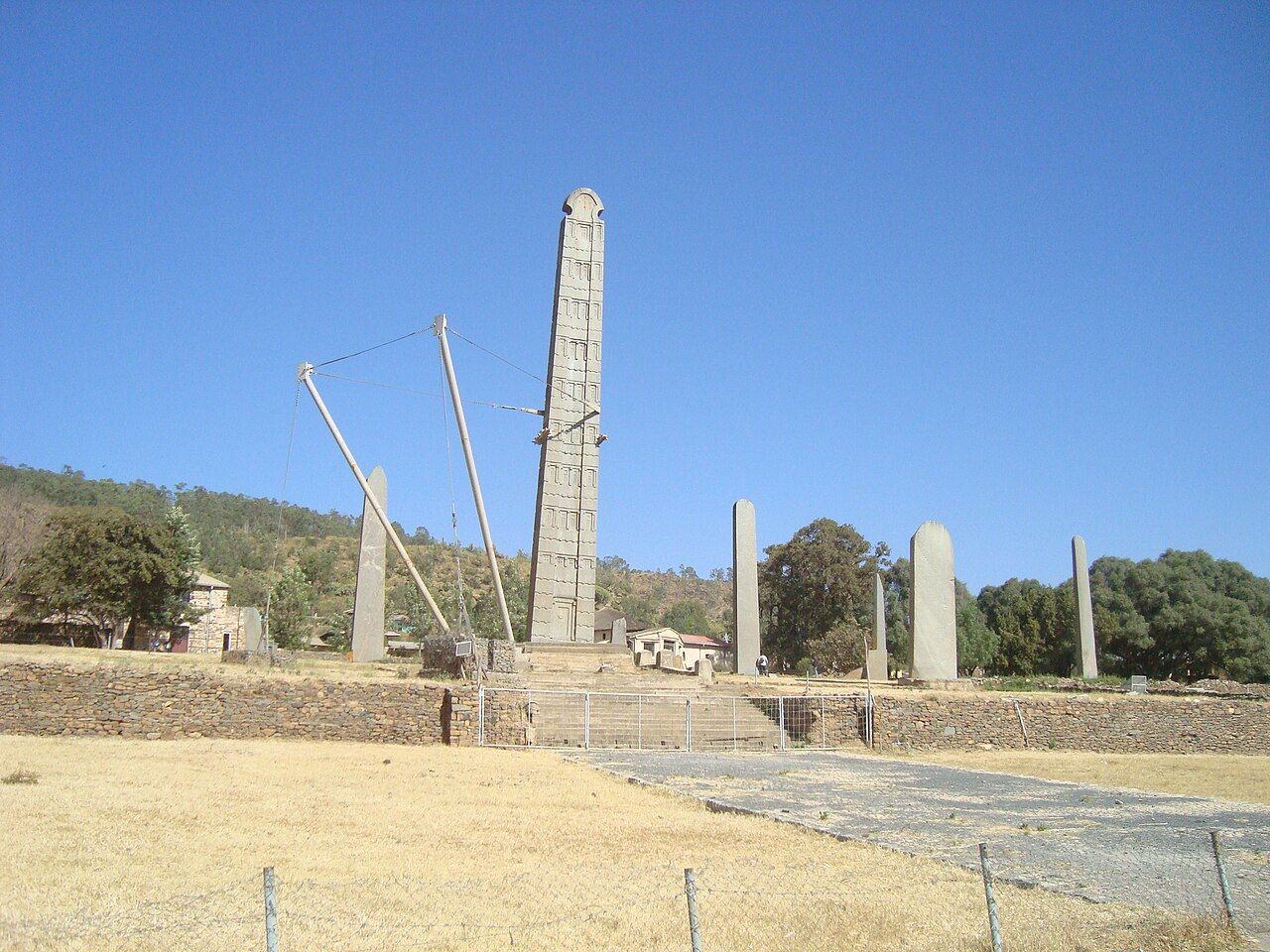
The main group of stelae stands in a park just off the central square. The stones were raised as grave markers over royal tombs, and the largest are carved to look like multi-storey buildings, with false doors, windows and the ends of wooden beams cut into the granite. They are the tallest single stones that any ancient people set upright, and nobody is quite sure how they were moved from the quarry west of town and raised.
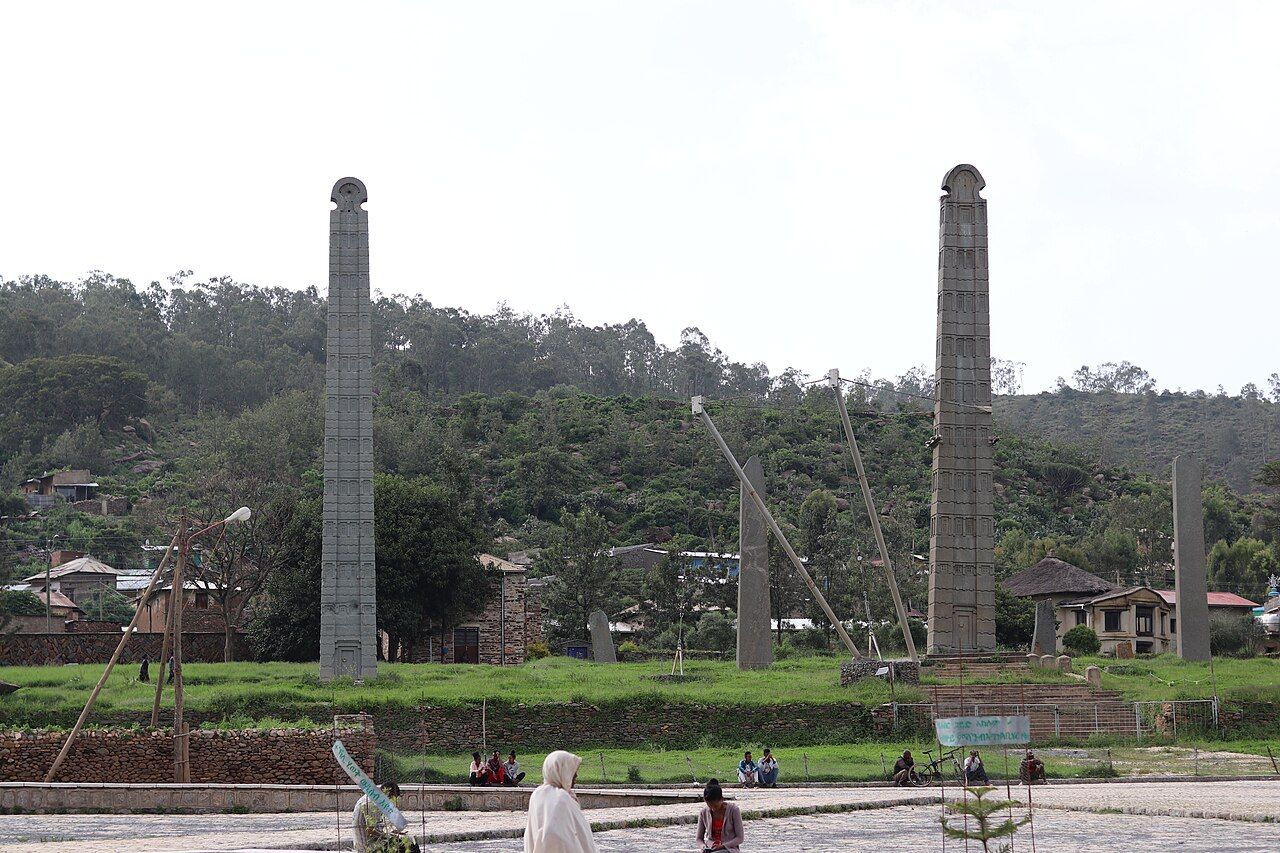
The one still standing in its original place is usually called King Ezana's stele, at around 21 metres. Beside it lies the Great Stele, the largest of all at over 30 metres, which broke into pieces when it fell, perhaps during its raising. Walk round it and you can see how the carved floors were meant to read from the ground up. Around these are dozens of smaller plain stones, some leaning, some fallen.
Under the park lie tombs you can enter. The Tomb of the False Door has a carved stone doorway on its exterior, and the larger structure often called the Mausoleum has a long central passage with side chambers. Bring a torch and watch your head. A small museum near the park holds coins, inscriptions, pottery and other finds; opening hours vary.
The obelisk that came home
The third great stele, about 24 metres tall, has the most modern story. It had fallen and broken long before, and in 1937, during the Italian occupation, it was taken to Rome in sections and set up near the Circus Maximus. Ethiopia asked for it back for decades, and an agreement for its return was made after the Second World War, but it was not until 2005 that it was flown back in sections. It was raised again in its old place in 2008 and now stands beside Ezana's stele, the pieces joined so carefully that the joins are hard to find.
For many Ethiopians the return of the obelisk was a matter of national pride, and it is worth knowing the story before you stand under it. For many Ethiopians the return of the obelisk was a matter of national pride, and it is worth knowing the story before you stand under it.
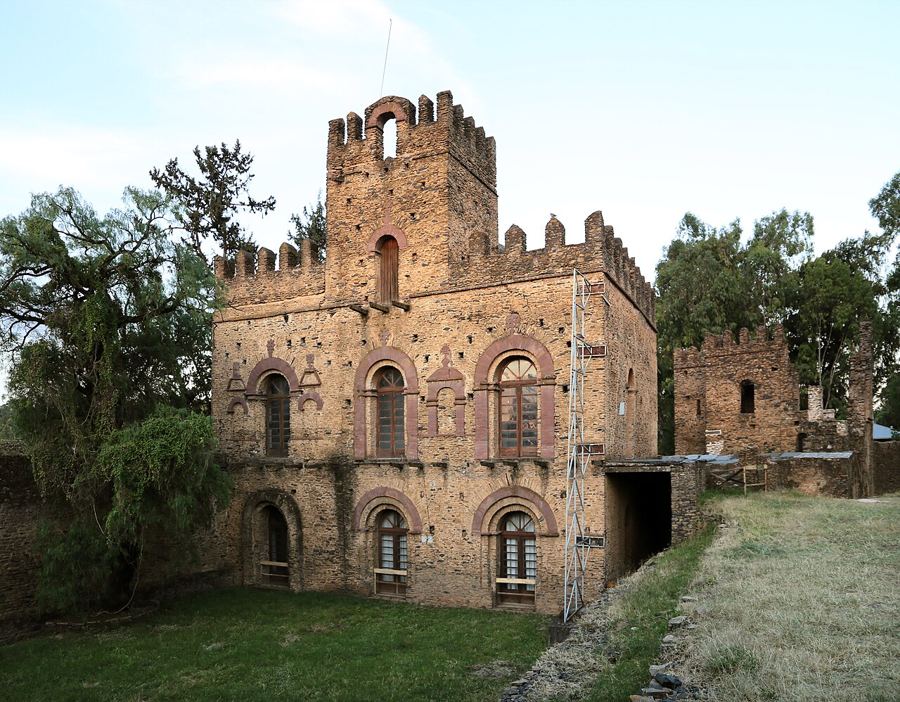 Plate 02 · GondarGondar, the castle city of the emperors
Our Lady Mary of Zion and the Ark
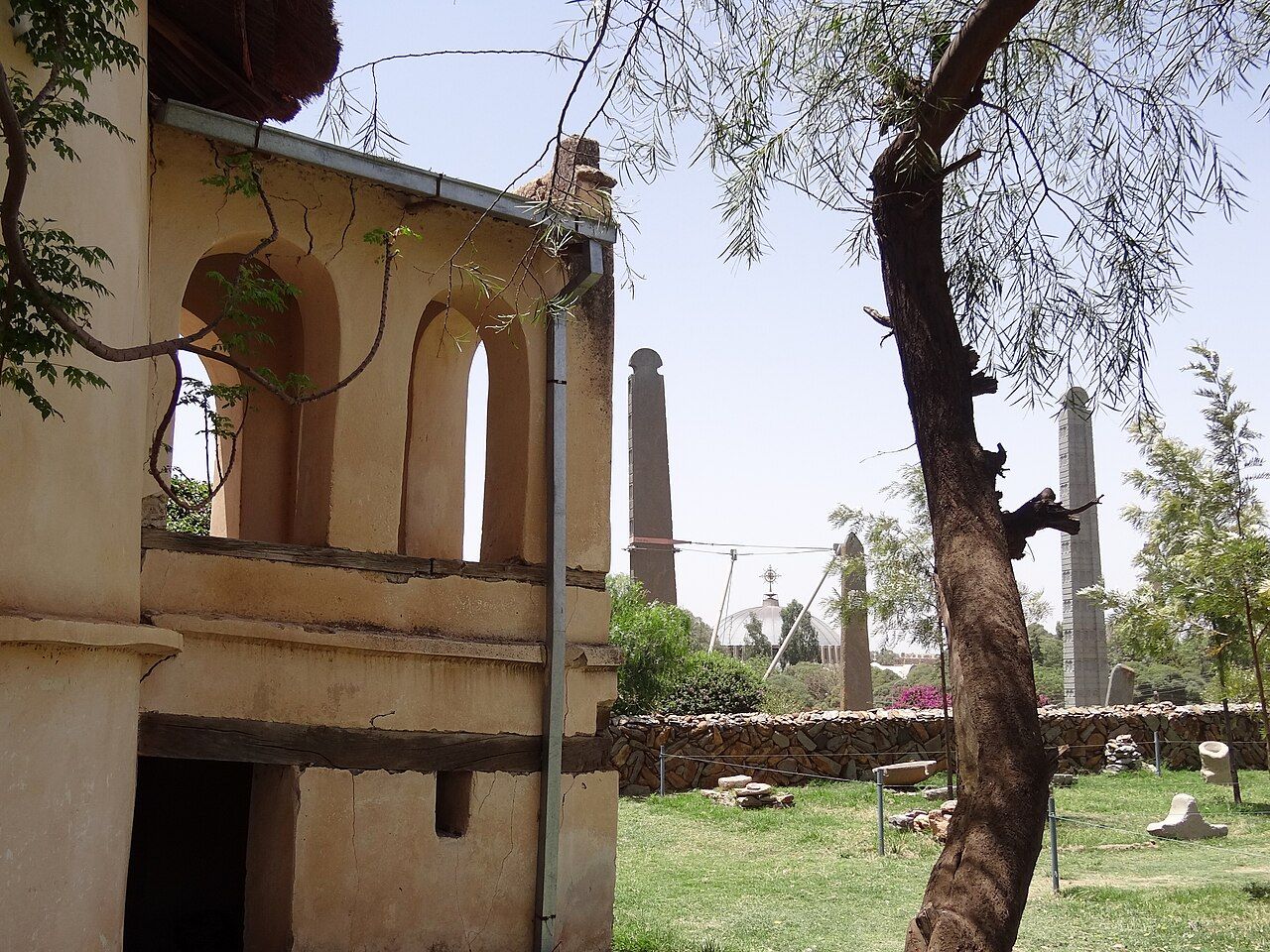
Across the square from the stelae park stands the compound of the Church of Our Lady Mary of Zion, the most important church in Ethiopia. Within it are several buildings from different periods. The old church, a battlemented stone building, was built in the time of Emperor Fasilides in the seventeenth century, on the site of earlier churches that tradition traces back to the Aksumite kings; by long-standing rule women do not enter it. The large domed cathedral beside it was built in the 1960s under Emperor Haile Selassie and is open to everyone. A treasury displays crowns, robes and crosses given by emperors over the centuries, when it is open.
Between them is a small, fenced chapel. In Ethiopian Orthodox tradition, it holds the Ark of the Covenant, brought from Jerusalem by Menelik, the son of King Solomon and the Queen of Sheba. A single monk, chosen for life, guards it, and nobody else may see it, so there is no way to test the claim; scholars do not accept it as history, while for believers it is central. Every Ethiopian Orthodox church keeps a tabot, a consecrated tablet that represents the Ark, and this is why the tradition matters across the whole country. Treat the chapel as you would any sanctuary: look from the fence and do not try to photograph the guardian.
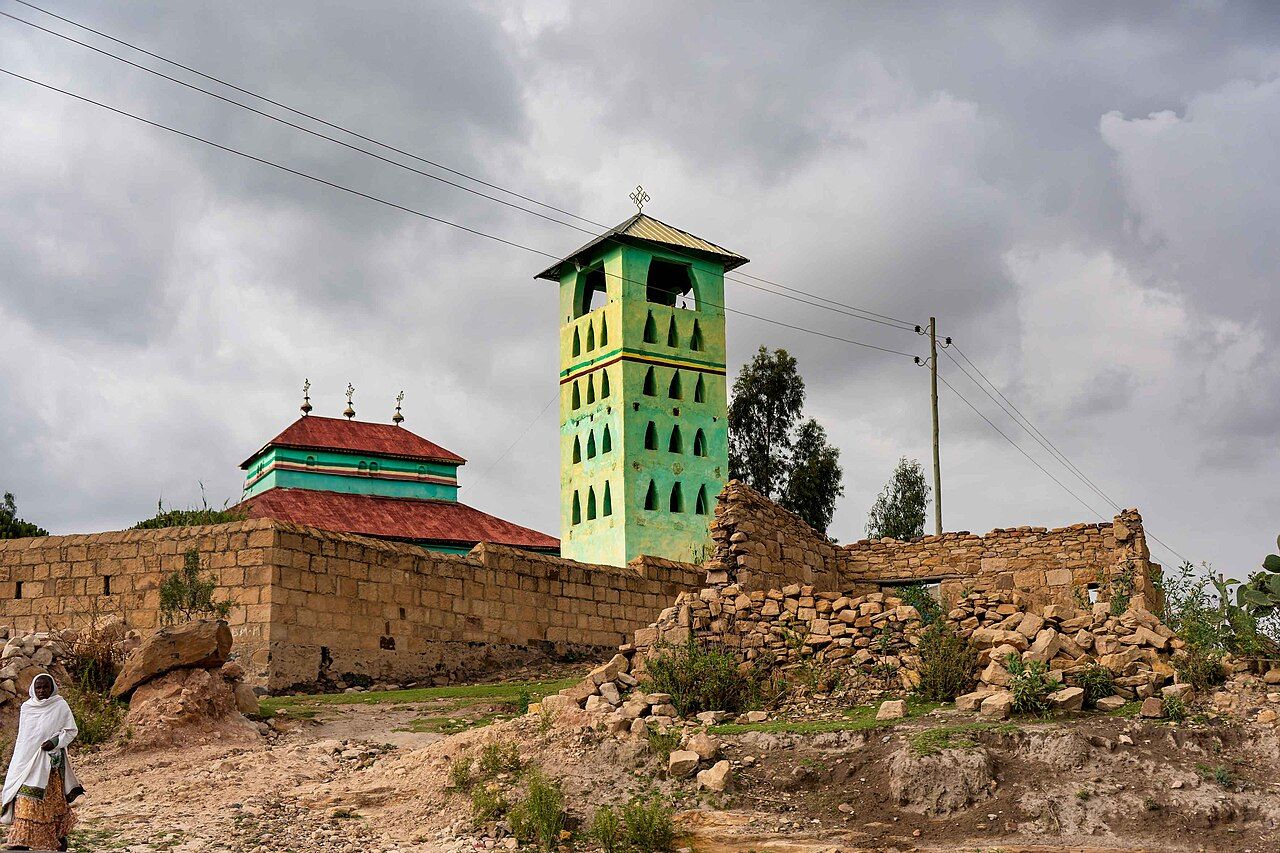
The Hidar Tsion festival in late November is the great feast of the church here and draws large crowds of pilgrims. Its date is set by the Ethiopian calendar.
The Ezana stone, Sheba and the outskirts
On the edge of town, in a small shelter, stands a stone carved with an inscription by King Ezana in three scripts: Ge'ez, a South Arabian script and Greek. It records his military campaigns and has been compared with the Rosetta Stone because the same text appears in more than one language. Farmers turned it up in their field in the late twentieth century, and it has stayed close to where it was found.
The Queen of Sheba is everywhere in Axum, though the stories attached to her are legend rather than archaeology. A large reservoir cut into the rock is called the Queen of Sheba's Bath and is still used for water. To the west, the excavated ruins of a large building called Dungur are known locally as her palace, though the building dates from many centuries after any queen of Sheba could have lived. North-east of town, the tombs attributed to the sixth-century kings Kaleb and Gebre Meskel are well built underground chambers on a hill with wide views, and a quarry site shows where the stelae were cut.
Visiting today
Axum lies in the Tigray region, which suffered heavily in the war of 2020 to 2022, and the town and its people were deeply affected. Conditions have changed several times since, and access, flights and services may still be limited.
When you go, dress modestly, take your shoes off where asked, and carry small notes for the separate fees charged at several sites. A licensed local guide is the best way to tie the scattered remains together. From Axum the road continues east towards the cliff churches of Gheralta, and the northern loop explains how Axum fits with Lalibela and Gondar.
Images on this page: Rod Waddington from Kergunyah, Australia (CC BY-SA 2.0); Jnyssen (CC BY-SA 4.0); Tesfawel (CC BY-SA 4.0); Adam Jones from Kelowna, BC, Canada (CC BY-SA 2.0); Rod Waddington (CC BY-SA 2.0); Sailko (CC BY 3.0).


