PaceRead this before you arrive. Confirm every departure time, opening hour and festival date in both systems, and allow a day's margin around festivals. Other plates in this section.
Ethiopia keeps its own calendar and its own way of telling time. Both are in everyday use alongside the international systems, and confusion between them catches out visitors every day: a bus that leaves six hours earlier than expected, a date on a ticket that seems to belong to another decade. The rules are simple once you know them, and a quick question in the right form avoids most problems.
Thirteen months
The Ethiopian calendar has thirteen months. Twelve have exactly thirty days each. The thirteenth, Pagume, has five days, or six in a leap year. The months run in order from Meskerem, which begins in September, through Tikimt, Hidar, Tahsas, Tir, Yekatit, Megabit, Miyazya, Ginbot, Sene, Hamle and Nehase, and end with Pagume. Like the Julian calendar, the Ethiopian calendar adds a leap day every four years without exception.
Because each month has the same length, the conversion to the Gregorian calendar follows a steady pattern through the year, with a shift of one day in the months around the leap years of the two systems. That is why festival dates sometimes move by a day.
New Year in September
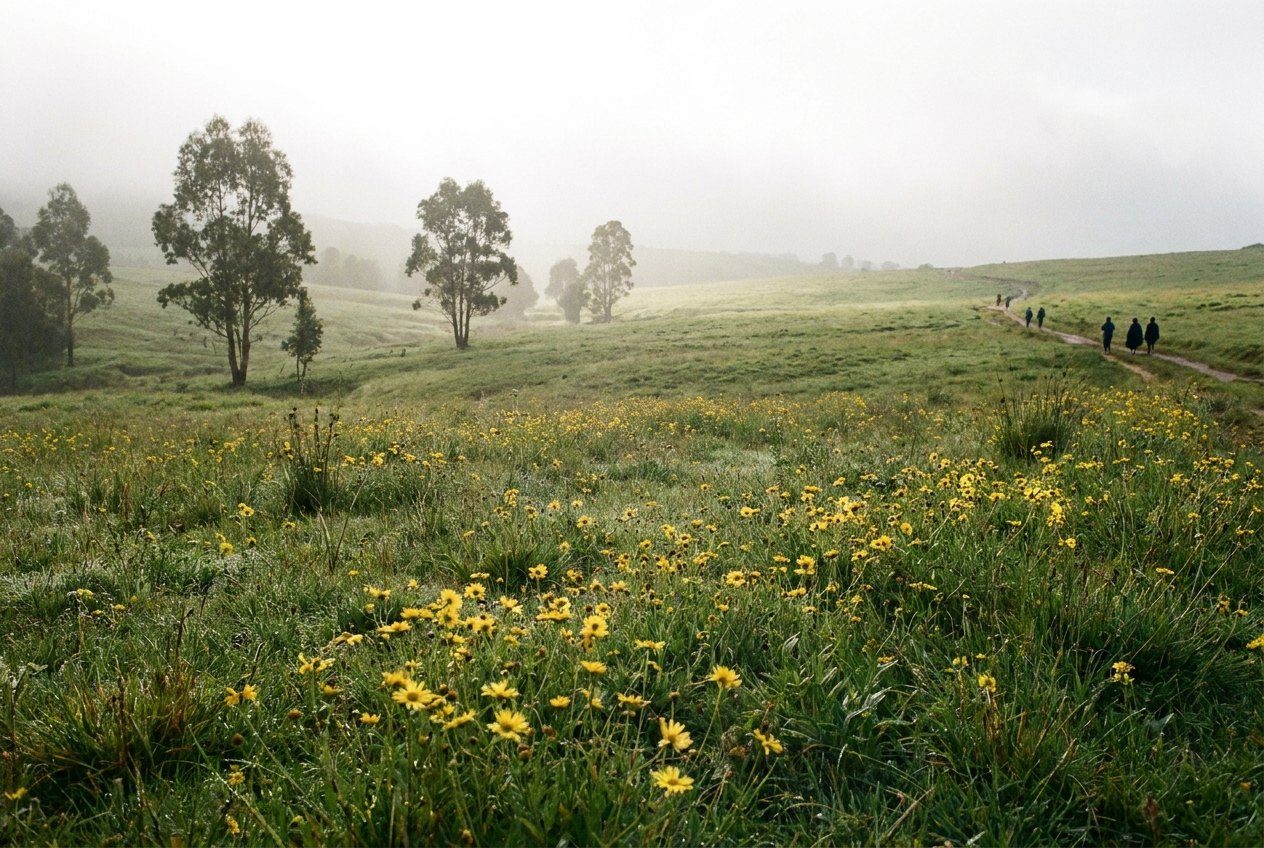
The Ethiopian New Year, Enkutatash, falls on 11 September, or on 12 September in the year before a Gregorian leap year. It comes at the end of the long rains, when the highlands turn green and yellow daisies flower. Families gather, children go from house to house singing and handing out drawings and flowers, and churches hold services. It is a public holiday, so offices and many businesses close.
Two weeks later comes Meskel, the Finding of the True Cross, around 27 September. The guide to Timkat, Meskel and Genna covers the main festivals and their dates in more detail.
Why the years differ
The Ethiopian calendar runs about seven to eight years behind the Gregorian one: seven years from January to early September, and eight years from Ethiopian New Year in September to the end of December. The Ethiopian year that began in September 2026, for example, is 2019. The gap comes from a different reckoning of the year of the birth of Christ, used by the Ethiopian church for many centuries.
You will see Ethiopian dates on newspapers, receipts, official documents and some tickets. If a date looks wrong by several years, it is probably in the Ethiopian calendar. Most hotels and businesses that deal with foreign visitors use Gregorian dates, but government offices and many local services use the Ethiopian ones. When dates matter, ask which calendar is meant.
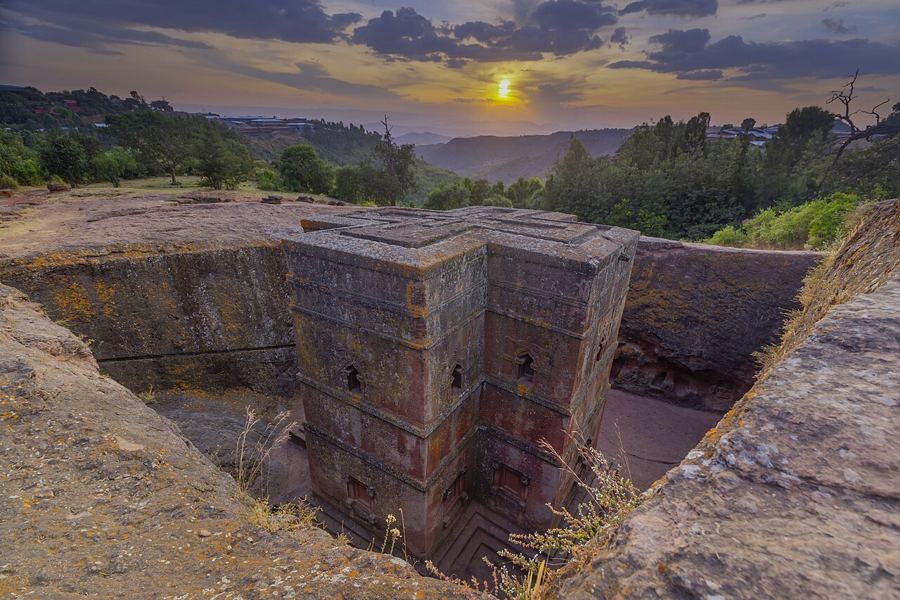 Plate 01 · LalibelaLalibela, where the churches go down into the rock
The clock starts at dawn
The Ethiopian clock divides the day into two halves of twelve hours, but it counts from dawn and dusk rather than from midnight and noon. Around 6 a.m. in European time is 12 o'clock, the end of the night, so 7 a.m. is 1 o'clock in the morning, Ethiopian time, and noon is 6 o'clock. In the same way, the evening hours start again at around 6 p.m., so 7 p.m. becomes 1 o'clock at night. Near the equator, day and night are close to equal throughout the year, and the system tracks daylight closely.
The quick rule is to add or subtract six hours. If someone says a bus leaves at 11, that may mean 5 a.m. in European time, which is a very common time for long-distance buses to depart. If a shop says it opens at 2, it may mean 8 a.m. The same applies to evening plans: dinner at 1 o'clock at night means around 7 p.m.
The words help too. In Amharic, times are usually given with a part of the day attached, such as morning, midday, evening or night, and that phrase is often the clearest clue. A driver who says he will come at 2 in the morning almost certainly means 8 a.m., not the middle of the night. If the answer still seems odd, ask again in a different way, or point at a clock and agree on where the hands should be.
Confirming times and dates
The two systems sit side by side, and people switch between them depending on who they are talking to. Clocks, phones, flight schedules and international businesses usually show European time. Conversations, local transport, markets and some church timetables often use Ethiopian time. The safest habit is to ask every time.
- Ask whether a time is in Ethiopian time or European time; both terms are widely understood.
- Repeat the time back, adding morning, afternoon or night.
- For bus departures, also ask whether to be there before dawn.
- For dates on tickets, permits and receipts, check which calendar is used.
- When a meeting or pickup matters, write the time down in both systems.
Domestic flights run on international time and Gregorian dates, so flight tickets are rarely a problem. Long-distance buses, church services and local appointments are where the mix-ups happen.
Festivals and planning on the calendar
The religious year follows the Ethiopian calendar, which is why the main Orthodox festivals fall on fixed Ethiopian dates. Genna falls on 7 January and Timkat around 19 January, or 20 January in leap years. Fasika, Easter, is a moveable feast after a long fast, and its date changes each year. Islamic holidays follow the lunar calendar and also move. Public holidays close banks and offices, and towns hosting big festivals fill up early.
When you plan a route, check the festival and holiday dates for your year and decide whether you want to be in a place for a celebration or to avoid the crowds. The guide to planning an Ethiopian circuit covers seasons and routes. For the food side of the calendar, the guide to injera and the fasting table explains how fasting days shape what you will find on the menu.
Images on this page: Thomas Fuhrmann (CC BY-SA 4.0).
